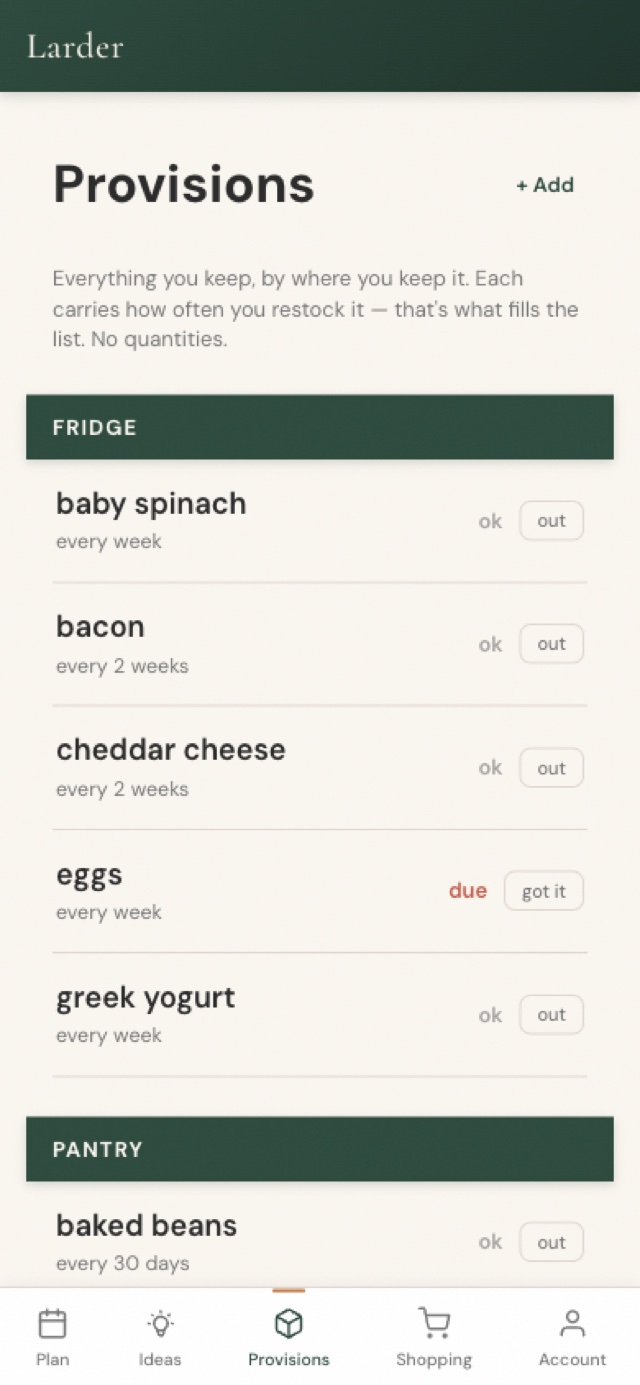
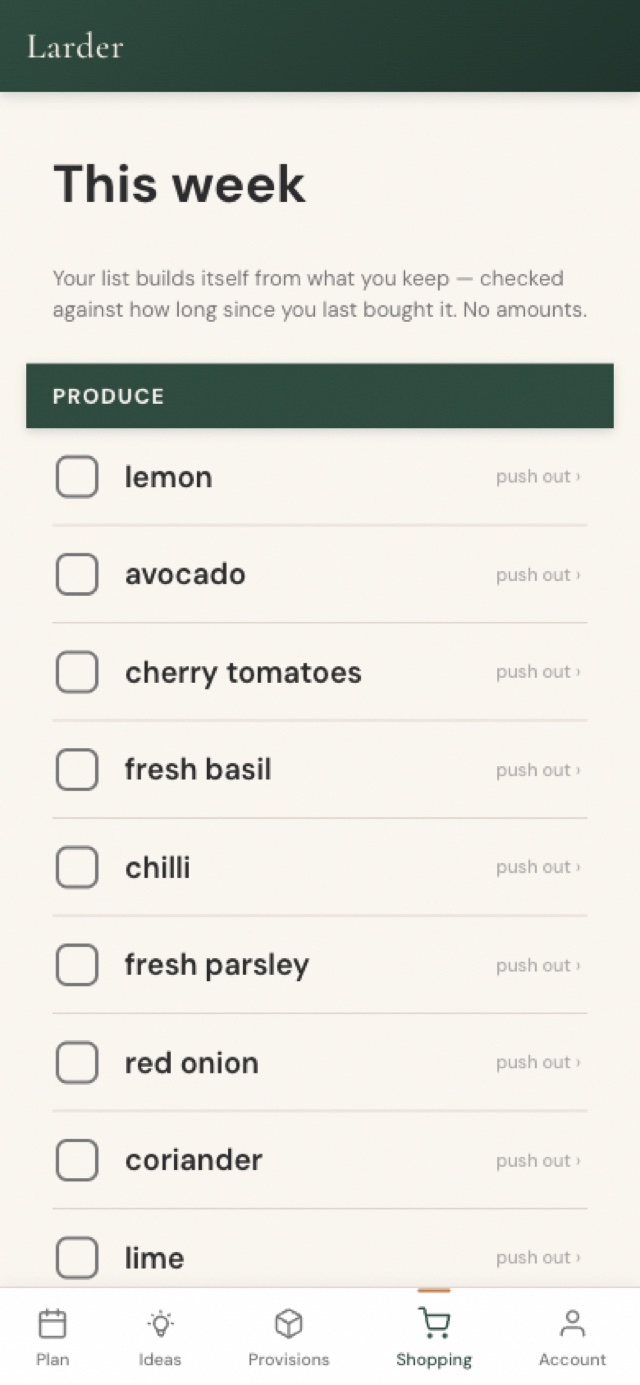
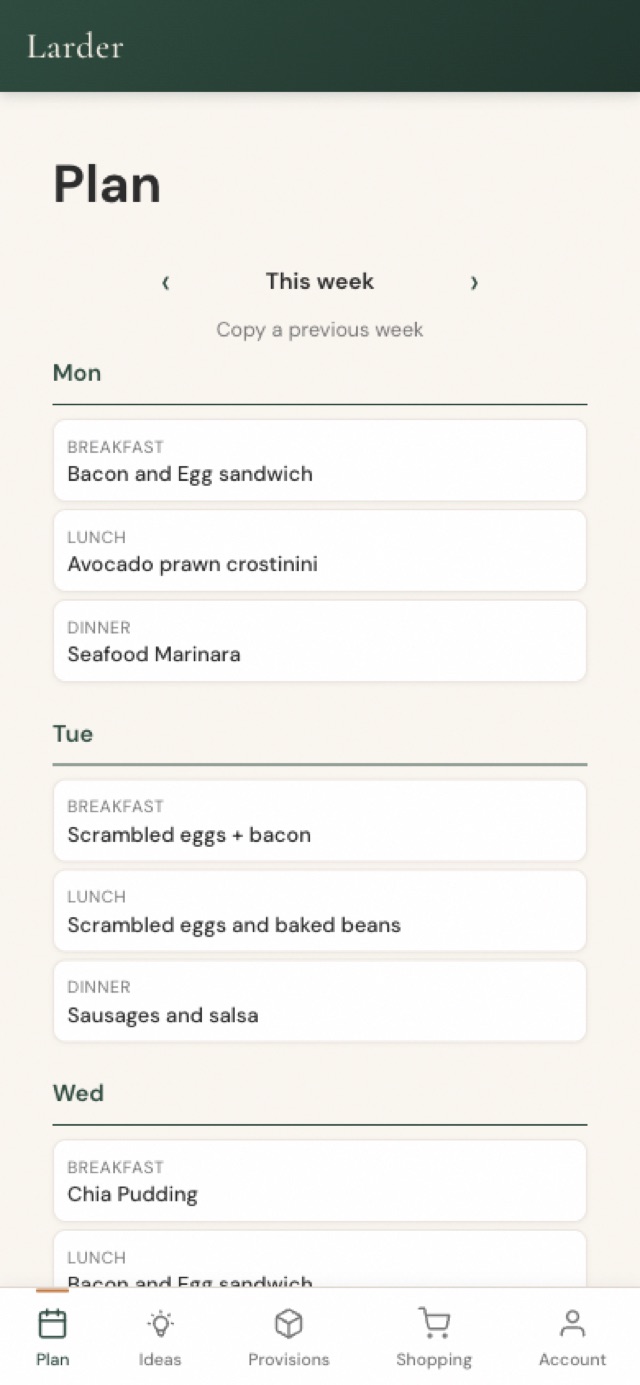
Tell Larder what your household keeps. It works out when each thing is due, and the list is ready before you are.
The meals, the ingredients, the amounts. Somebody in the house does it for a while, and then stops. The app isn’t abandoned because it was bad — it’s abandoned because it asked for the same work every week and gave nothing back when the work stopped.
Larder starts from the other end. Milk is weekly. Flour thinks it’s monthly and is usually right. You name what the house keeps and roughly how often it runs out — once — and the list assembles itself from those rhythms, in the order you walk the store. Tick things off as you buy them; the rhythm updates itself.
No quantities anywhere. “Have or don’t” turned out to be all a household actually needs.
No primary user, no invited member, no second-class seat. Whoever’s near the shops adds what’s missing; whoever’s home notices the coffee is low. One household, one list, both phones.
Larder installs from the browser — “Add to Home Screen” in Safari on iPhone, install in Chrome on Android. There is no app store version, on purpose.
Hovenly is a small suite for the two people who run a household together — the shopping and the meals, the papers you keep and prove, the shared calendar. Privately held, not for sale at any price. Larder is free, and always will be.